


Our Reclaimed Wood
The short answer
- Character: reclaimed oak carries patina, nail holes, saw marks and colour that only time gives. New oak is calmer and more even, and can still be chosen for character.
- Cost: reclaimed oak usually costs more, because recovering and preparing old timber takes time and skill.
- Stability: both can be laid as solid or engineered boards. Over underfloor heating, choose engineered.
- Sustainability: reclaimed oak fells no new tree. New oak should come from certified forests.
- Choosing: see both side by side, in your light, before you decide.
What is the difference between reclaimed and new oak flooring?
Reclaimed oak is timber recovered from old buildings: barns, mills, factories and houses. It is de-nailed, cleaned, kiln-dried and re-milled, then finished, much of it by hand. Our 18th & 19th Century Antique European Oak comes from European structures of that age, with over two centuries of patina.
New oak is sawn from trees felled for the purpose and milled to a specification. Ours is new European oak, cut into solid and engineered boards from high-density timber, and our Hand-Made French Oak is made by hand in the south of France from naturally felled, slow-grown trees.
Character: what you see and feel
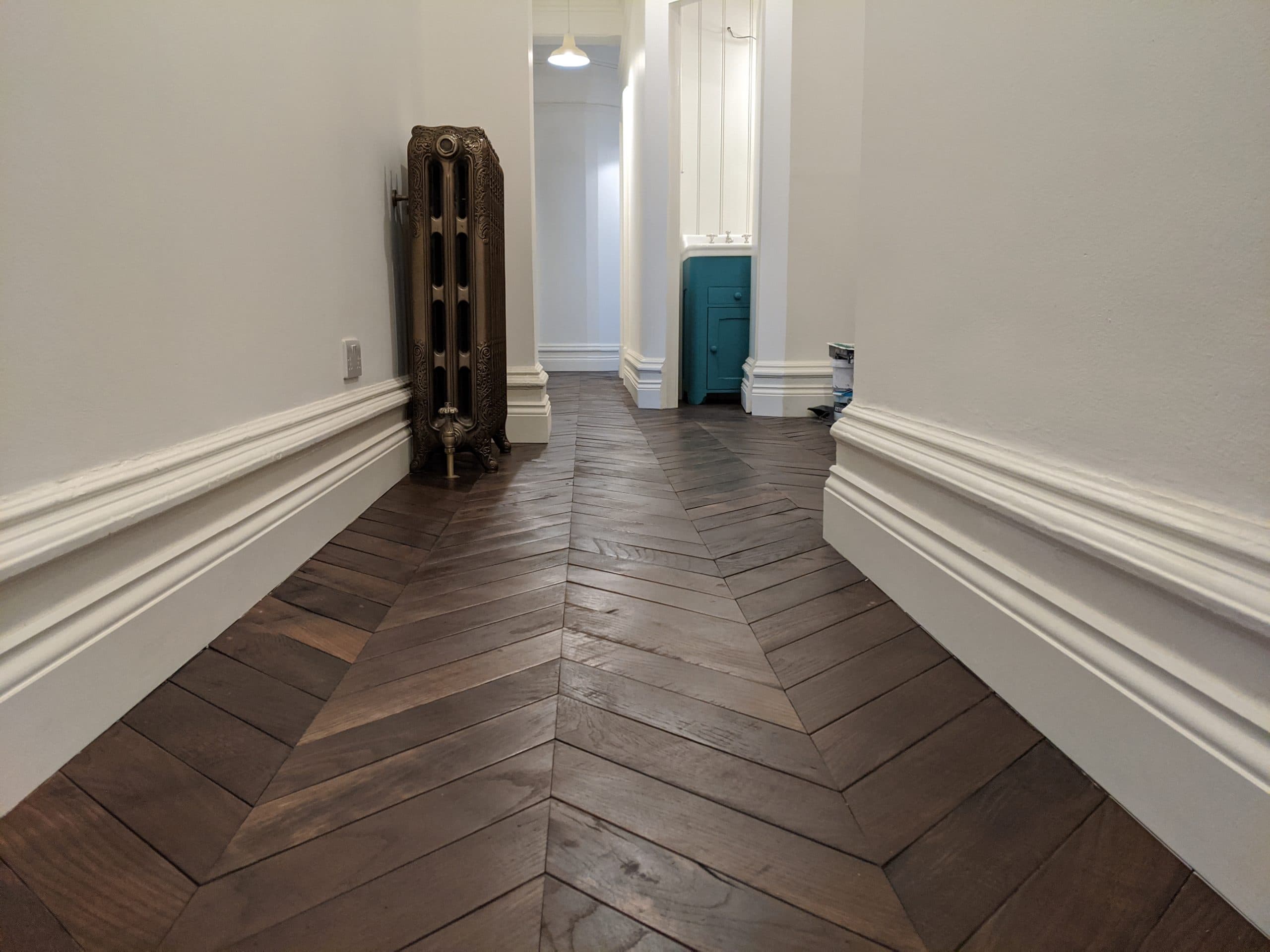
The life of reclaimed oak is written on its face. Old fixings leave nail holes, saws and adzes leave marks, and decades of light and wear deepen the colour into a patina no stain quite copies. No two boards are alike, which is the point.
New oak reads quieter. Its colour is more even and its surface cleaner, which suits a calm, contemporary room. It is not without character, though: English Pippy Oak is a new oak chosen for its distinctive pippy grain, and Bespoke European Aged Oak is new oak with tailored widths, tone and finish, aged to give it depth.

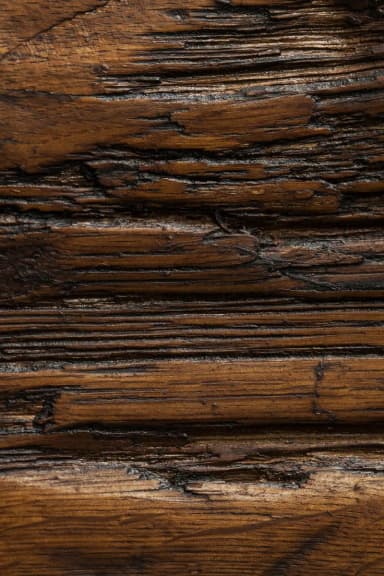
Reclaimed oak: knots and saw marks

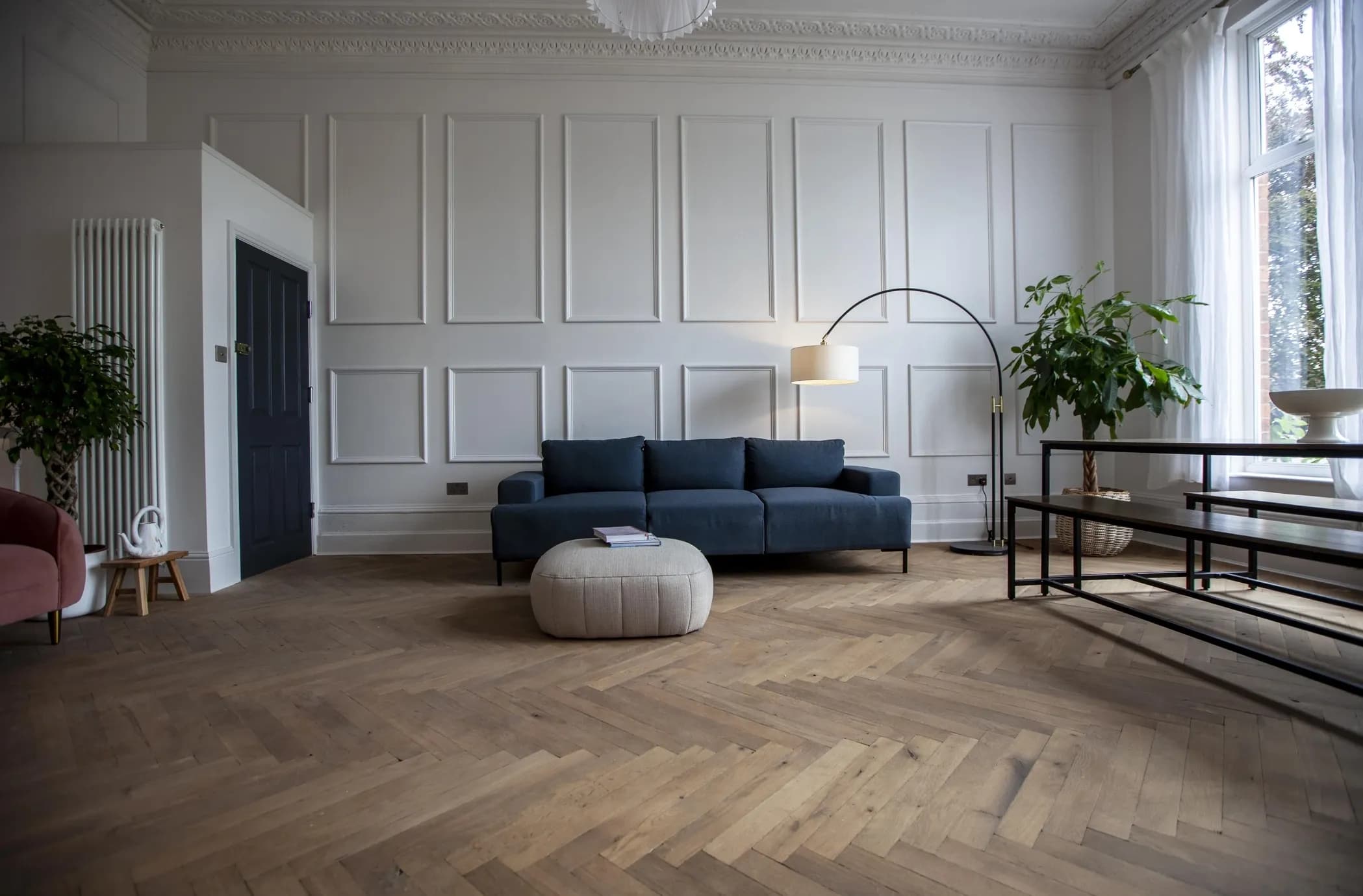
New oak: Hand-Made French Oak
Cost: is reclaimed oak flooring more expensive than new?
Usually, yes. A reclaimed floor is recovered before it is made: the timber is lifted from a building, de-nailed, dried, re-milled and finished, and every step takes time and judgement. Supply is limited, too, because one batch of old timber is all there is of that wood.
The price of either depends on the species, the age of the wood, the width and length of the boards, the grade, the construction (solid or engineered) and the finish. The fairest comparison is two quotes for the same room, the same format and the same finish.

Recovered timber, cut in our Cheshire workshop

Prepared and milled

Sanded and finished by hand

Laid by hand
Stability and underfloor heating
Old timber has spent decades drying in a building, and once it is properly prepared it is stable and hard-wearing. New oak is kiln-dried to a specification. The bigger difference is the construction, not the age:
- Solid boards suit rooms without underfloor heating and can be sanded many times.
- Engineered boards move far less as a floor warms and cools. Over underfloor heating, choose an engineered board with a reclaimed, antique or new oak top layer, and keep the floor surface at or below 27°C.
Sustainability
Reclaimed oak is timber already cut. No new tree is felled for your floor, wood that would otherwise be burnt or sent to landfill stays in use, and the carbon it holds stays locked in the wood for another lifetime.
New oak should come from responsibly managed forests. Our new oak is FSC® certified, so its source is documented.

Our Bespoke European Aged Oak

Our Hand-Made French Oak
Installation and care
Reclaimed and new oak are laid the same way. Allow two or three weeks for the boards to settle to the room before they go down, and fix them with glue or nails: we do not recommend a floating floor. Make sure one batch covers the whole floor, with an allowance for waste, since a second batch will be different wood.
Both are cared for the same way too, with a regular clean and a fresh coat of oil when the finish wears. Our guide to how often to oil a wood floor has the detail.
How to choose
Start with the room. A reclaimed floor suits a house that wants depth and history, or a new building that needs something with a past. New oak suits a calmer scheme, a tight programme or a large area where one even tone matters. If you are drawn to both, an aged new oak or an engineered reclaimed board often sits between them.

Then see them. Colour changes with light, so look at samples in the room itself, or visit our Mayfair showroom by appointment. A sample box brings a selection of floors to you.
Reclaimed Oak vs New Oak FAQs
Is reclaimed oak flooring better than new oak?
Neither is better in every room. Reclaimed oak offers patina and history that new wood cannot have; new oak offers an even tone, wider choice and easier supply for large areas. Choose by the character you want, the budget and the programme.
Why is reclaimed oak flooring more expensive?
Because the timber has to be recovered, de-nailed, dried, re-milled and finished before it becomes a floor, and supply is limited to what one building yielded.
Can new oak be made to look old?
Yes. New oak can be aged, brushed and oiled to deepen its colour and texture, as in our Bespoke European Aged Oak. It looks older; it does not carry the marks of a real past life.
Can reclaimed oak go over underfloor heating?
Choose an engineered board with a reclaimed or antique oak top layer, and keep the floor surface at or below 27°C.
Is reclaimed oak flooring sustainable?
It is one of the lightest choices: no new tree is felled and existing timber stays in use. Ask how it was prepared and where it came from.
Re:sources
- Re:claimed Journal, Reclaimed Floorboards: A Buyer’s Guide: preparation, acclimatisation and installation.
- Re:claimed Journal, Engineered vs Solid Parquet Flooring: underfloor heating and the 27°C limit.
- Re:claimed Journal, Is Reclaimed Wood Better than New Wood?: the same question beyond flooring.
- Re:claimed, Sustainable New Wood Flooring.
Ask for our FSC® certified products (FSC® C109654).