


Herringbone Flooring
From masonry to parquet
A short history of the pattern
Ancient Rome
Opus spicatum lays brick and tile in opposing diagonal courses for paving and masonry.
1420 to 1436
Brunelleschi uses herringbone brickwork in the construction of the dome of Florence Cathedral.
Around 1539
Francesco Scibec da Carpi lays parquet in the Galerie François I at Fontainebleau.
Late 1620s
Queen Henrietta Maria brings French parquetry to Denmark House, now Somerset House.
Three approaches to herringbone flooring

18th Century Antique European Oak Herringbone, Unfinished
Solid European oak, aged circa 200 years, reclaimed largely from historic French and wider European structures.
Antique and heritage herringbone

Bespoke European Aged Oak
New engineered European oak, tumbled with natural abrasives for a settled patina, then hand-finished in Cheshire. Shown in a Manchester renovation.
Modern herringbone

Hand Made French Oak, Unfinished Herringbone
Naturally felled old-growth French oak, shaped by French craftsmen and supplied unfinished as a character-rich starting point for a more tailored specification.
Bespoke herringbone
Drawn before it is cut
The work behind the pattern
Precision should bring the blocks together without sanding centuries of character out of the timber.
Herringbone in our projects

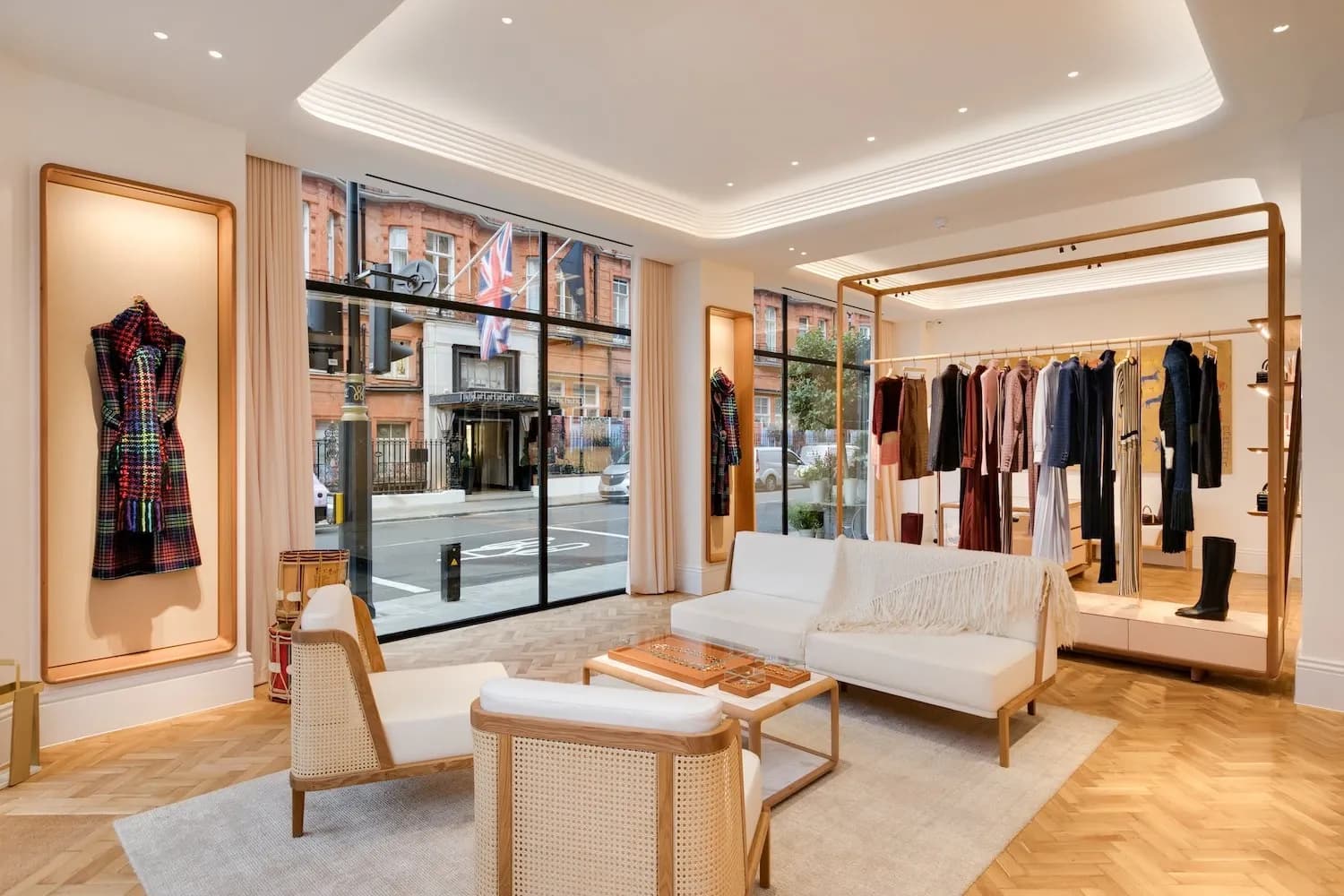
Gabriela Hearst, London flagship

500+ m² of French Carriage herringbone at the Dornoch Station Hotel, Scotland


One pattern, different design traditions
Comparing herringbone, chevron and Versailles
Herringbone Flooring FAQs
What is herringbone flooring?
Herringbone flooring is a parquet layout made from rectangular blocks placed at 90-degree offsets, with the end of one block meeting the side of the next. The repeated arrangement creates the familiar broken zigzag. Herringbone-style flooring can be made in reclaimed, new, solid or engineered timber, with block size and surface treatment changing how strongly the pattern reads in the room.
What is the difference between herringbone and chevron flooring?
Herringbone uses straight-ended rectangular blocks that overlap at 90 degrees. Chevron uses blocks cut at an angle so their ends meet point to point in a continuous V. Herringbone has a broken, layered rhythm; chevron creates a cleaner and more directional line. Re:claimed produces both in antique, aged and bespoke European oak specifications.
Can herringbone wood flooring be used with underfloor heating?
Some engineered herringbone constructions can be specified over underfloor heating, but suitability depends on the product, overall thickness, subfloor, heating system and installation method.
Is reclaimed herringbone suitable for a modern interior?
Yes. Antique oak brings softened edges, patina and tonal movement into cleaner contemporary rooms, where those irregularities can sit against stone, plaster, glass and precise joinery. For projects that want tighter colour control and sharper geometry, new aged oak gives the same herringbone structure with a more even surface character.
Is herringbone hardwood flooring always solid wood?
No. Herringbone hardwood flooring can be solid or engineered. "Hardwood" describes the timber, while "solid" and "engineered" describe the construction. The right format depends on the collection, subfloor, floor build-up, underfloor heating requirements and the scale of the blocks being specified.
How long does herringbone flooring take to install?
Herringbone generally takes longer to set out and install than a plank floor because each block forms part of a repeating geometry. The actual programme depends on room size, substrate preparation, borders, transitions, construction and finishing requirements. Re:claimed and the installer can give a realistic schedule once the floor and site conditions are known.


