

Wood grade shouldn't be confused with quality, which refers to the end product after it has been through the manufacturing process. In other words:
- Grade is the natural look of the wood: knots, streaks, shakes, wane, all the natural features that haven't been changed by man.
- Quality is the finished wood after it has been altered: length, width, depth, finish, colour.
So the two characteristics used to define wood are quite different, and they can be mixed. A lower grade wood manufactured to the highest standards delivers top-quality flooring, whilst wood of the highest grade, poorly manufactured, will equally provide a poor floor.
Grade is given by the tree. Quality is earned in the workshop.

The thicknessing machine, where quality is decided

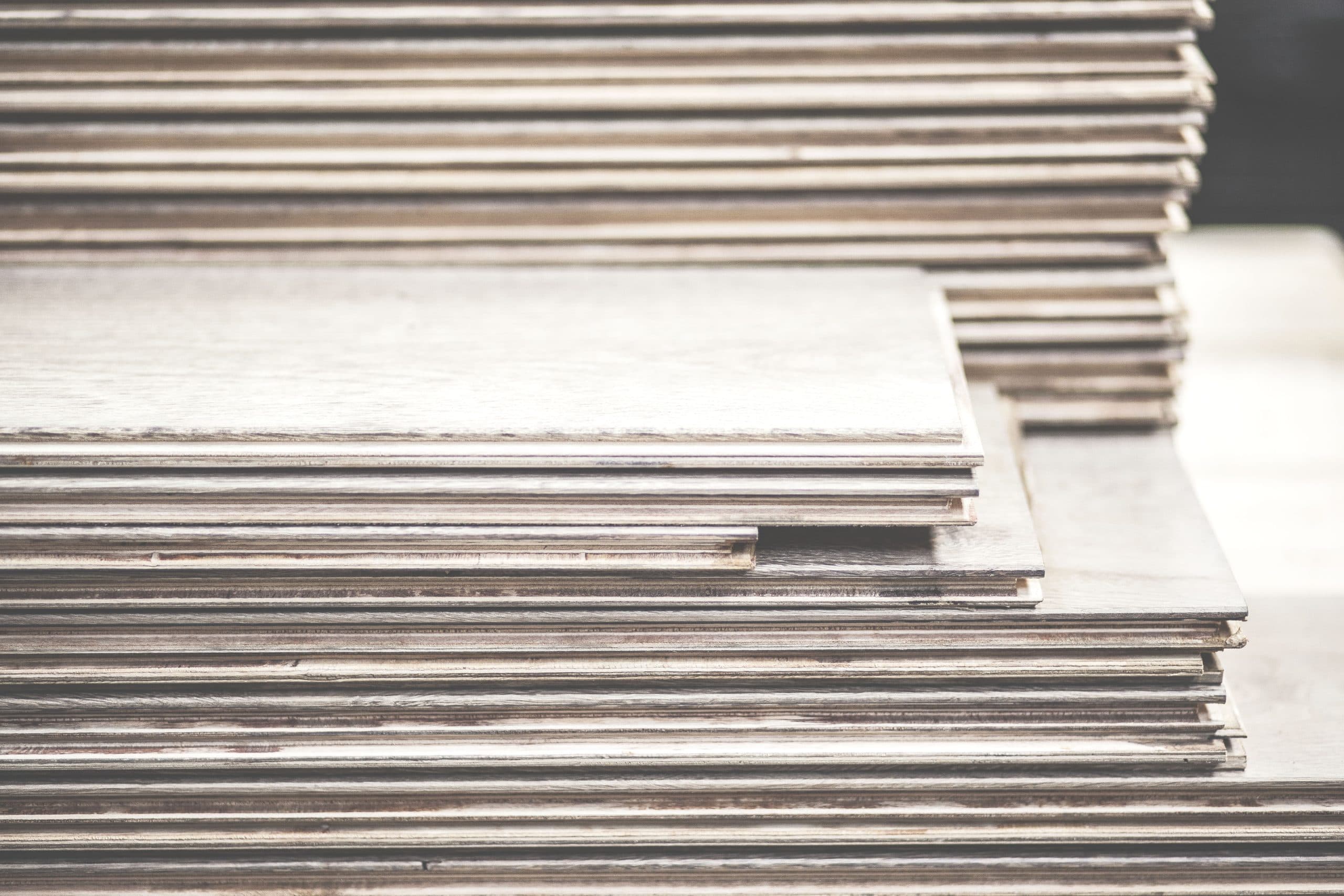
Boards stacked for grading
The main wood grading systems
Grading is a language of appearance, and there are two dialects you will meet when buying a floor.
The European oak convention runs from AB to CD, and most suppliers translate the letters into names:
- AB, or Prime: the cleanest boards, even in colour, with few and small knots.
- ABC, or Select: some knots and a little more colour variation.
- ABCD, or Natural: open knots and honest variation from board to board.
- CD, or Rustic: the full character of the tree, knots, contrast and all.
The letters describe a mix, not a single look, and each maker defines their own blend, so two "Natural" floors from two mills will not match. Ask to see the supplier's own grading standard.
The North American system, set by the National Wood Flooring Association, uses four names for unfinished oak: Clear, Select, No. 1 Common and No. 2 Common. The NWFA is plain that these are appearance grades only; a No. 2 Common board is as sound as a Clear one, it simply shows more of its life.
Neither system is a ranking of better and worse. A Prime floor suits a quiet, formal room; a Rustic floor carries a farmhouse kitchen. The grade you want is the look you want.

The cleaner end of the scale: long, even grain

The character end: knots and colour variation
How reclaimed wood is graded
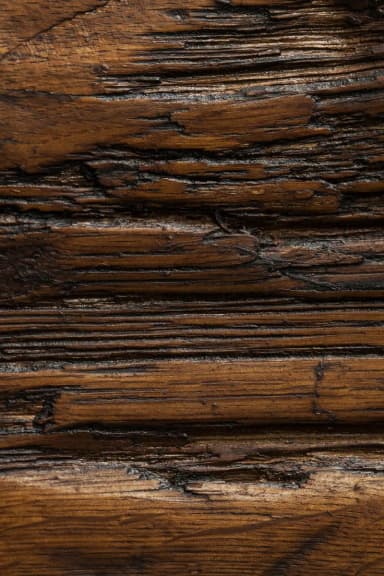
Reclaimed wood plays by its own rules. The knots, nail holes and patina that a new-wood grader would count against a board are the reason a reclaimed board is wanted at all: they are its provenance, written on the surface.
So reclaimed boards are not graded against a mill chart. Ours are graded by hand in the Cheshire workshop, board by board, judged on soundness and on character. The question is never "how few marks", but whether the marks tell well.

Some words of advice
- The grade of the wood you buy indicates its visual appearance, nothing more. Judge quality separately: ask how the board was dried, machined and finished.
- The most cost-effective way to improve a grade, "a cleaner version of character grade" for example, is to buy around 10% extra material and grade the floor as it is installed, setting the busiest boards aside. It usually costs less than paying for the grade above.

The final grading of any floor happens during the fit, when the fitter places each board in the space. A good fitter is the last and best grading machine a floor passes through.

Wood grade FAQs
What is clear or prime grade wood?
The cleanest appearance grade: even colour and few, small knots. In the European convention it is called Prime or AB; in the North American NWFA system, Clear.
Is a higher grade better wood?
No, only cleaner-looking wood. Grades describe appearance, not soundness or durability. A Rustic board, well manufactured, makes as good a floor as a Prime one.
Does the grade affect durability?
Not in itself. Durability comes from the species, the drying, the manufacture and the finish, which is to say from quality. What is hardwood covers the species side.
What grade is reclaimed wood?
Reclaimed wood sits outside the standard charts. It is graded by hand for soundness and character, and the marks that lower a new board's grade are precisely what reclaimed buyers are looking for.
Re:sources
- National Wood Flooring Association, Wood Flooring Grades (CEU course): the North American appearance grades.
- Penn State Extension, Hardwood or Hard Wood: species, hardness and what the labels mean.


