
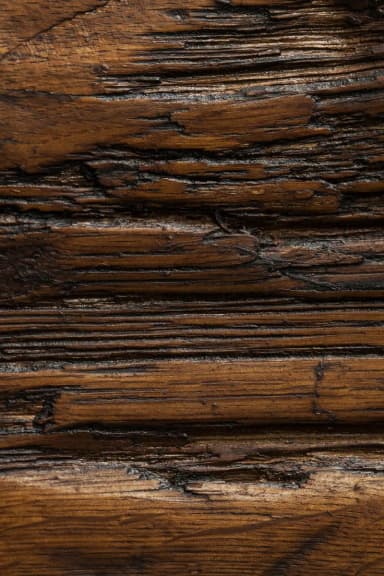




Lake Bayano, Panama, 2013
Most wood that falls into a river or a lake disappears within a few years. Some does not. Trunks that sink into deep, still water can lie there for decades, and when they are brought back up, the timber inside is still sound.
The short answer
- Does wood rot under water? Very slowly, if it is fully submerged in deep, still water. Below a few metres a deep reservoir holds almost no oxygen, and the fungi and insects that break wood down cannot work without it.
- Where it comes from: sunken logs are trees felled on land that sank in rivers on their way to the mill; submerged wood comes from whole forests flooded when reservoirs were created.
- How it is recovered: by divers working from barges on rivers, and by underwater logging machines in flooded reservoirs.
- Why logs are stored in water: keeping freshly felled logs wet, under sprinklers or in ponds, protects them from stain fungi, beetles and cracking while they wait at the mill.
How does wood end up under water?
Sunken logs. On Quebec's Gatineau River, timber travelled to the mills by water for a century and a half: log drives ran from the 1830s until the last one in 1990, and many logs sank before they reached the mill on the Ottawa River. Salvage divers have been bringing nineteenth-century timber back up from the riverbed since the late 1990s.
Submerged forests. When large reservoirs were created, usually for hydroelectric dams, the forests in the valleys were flooded where they stood. The trees died as the water rose, and the deep water below has kept their trunks preserved for decades.
The difference matters. A sunken log is a single felled tree; a submerged forest can supply timber at the scale of a whole project. Our guide to sunken wood, submerged wood and bog oak compares the three in detail.

Lake Bayano, Panama, 2013

Lake Bayano, Panama, 2013
Why doesn't wood rot under water?
Wood decays because fungi and insects break it down, and they need oxygen to do it. In a deep reservoir, the water below the top few metres holds almost no oxygen, so the submerged trunks keep their structure, colour and grain. Wood in the shallows, or where the water level rises and falls, is exposed to oxygen and decays in the usual way, which is why recovery concentrates on deeper water. Our page on sustainable hardwood sets out the evidence for one reservoir in detail.
Why are logs stored in water?
Sawmills have long kept logs wet while they wait to be sawn. A freshly felled log dries fastest at its ends, which crack (end checking), and a drying log invites stain fungi and wood-boring beetles. Sprinkling stockpiled logs with water, or floating them in a pond, keeps the wood moist enough to hold all three back. Sprinkling is now the more common method.

How underwater logging works
On a riverbed, divers work from barges with cutting and lifting equipment, locate the trunks, cut them free and bring them to the surface.

In a flooded reservoir the work can be mechanised. At Petit-Saut in French Guiana, where the dam was closed in 1994 and the rainforest in the valley flooded, sonar maps the submerged forest and guides the harvesting plan. Triton's SHARC™ harvester, mounted on a barge, cuts each trunk under water at its base and lifts it out, and the roots stay in the lake bed. Only trees above about 20 cm in diameter are cut, and the logs cross the reservoir on floating bunks pushed by a tug, with no roads built.
On land, the logs are sawn, dried slowly and graded like any other timber.

Triton's SHARC harvester at Petit-Saut. Photograph: Triton Timber
Is underwater wood sustainable?
Recovering wood from under water fells no living tree, and it brings back timber that would otherwise stay out of use. It is not reclaimed in the strict sense of having been used before, so whether it counts as "reclaimed" depends on the scheme you are working to. It is also not free of impact: recovery disturbs the water and the life in it, which is why a responsible operation keeps out of shallow, oxygen-rich areas, protects wildlife and documents the origin of its timber.
At Petit-Saut, Triton keeps about 17,000 of the reservoir's 34,500 ha out of harvesting, including all the shallow water where most of the lake's life is found, and works about 2% of the surface in any one year. Origin is documented with a certificate of origin from the French forestry authorities. Our sustainable hardwood page sets out the full evidence, including the questions researchers have raised.

Lake Bayano, Panama, 2013
Underwater wood in our Submerged Wood Collection
Our Submerged Wood Collection is tropical hardwood recovered by Triton from Petit-Saut. The catalogue presents 22 species, from Chawari, Courbaril and Balata, available in volume, to rarer timbers such as Saint Martin Jaune. It can be laid as floors, walls and ceilings, and outdoors as hardwood decking, cladding and yacht decking. Download the catalogue to see every species.
Underwater Wood FAQs
Does wood rot under water?
Not quickly, if it is fully submerged in deep, still water. With almost no oxygen below the surface layer, the fungi and insects that decay wood cannot work, and trunks can stay sound for decades.
What is the difference between sunken wood and submerged wood?
Sunken wood comes from felled logs that sank in rivers on their way to the mill. Submerged wood comes from whole forests flooded when reservoirs were created. Our comparison guide also covers bog oak.
Why are logs stored in water?
To keep them moist while they wait at the mill. Wet storage, by sprinkling or in a pond, protects logs from end cracking, stain fungi and beetles.
Is underwater wood waterlogged?
When it comes up, yes. It is then sawn and dried slowly before it is used, like any other timber.
What is underwater logging?
Recovering timber from under water. On rivers, divers bring up logs that sank on their way to the mill; in flooded reservoirs, harvesting machines on barges cut the standing dead trees at their base and lift them out.
Is underwater wood sustainable?
It fells no living tree and brings unused timber back into use, but recovery still affects the water and its wildlife, so look for documented origin and an operation that protects the reservoir.
Re:sources
- Ecohome, Reclaiming sunken timber from the log drive: the Gatineau River drives and their salvage.
- BioResources, Problems encountered in log depots and measures to combat them: a review: wet storage of logs.
- Re:claimed, Sustainable hardwood: the evidence for oxygen-free water in a deep reservoir, with its scientific sources, and the harvesting figures for Petit-Saut supplied by Triton Timber.


