



Our New Aged Herringbone
Like any wood floor, parquet brings warmth to a room. What sets it apart is the pattern: instead of long boards running the length of the room, short pieces of wood are fitted together to form a geometric design.
The short answer
- What it is: a floor of small wooden blocks or strips laid in a repeating pattern, such as herringbone, chevron or Versailles panels.
- What the word means: it comes from the Old French parchet, the diminutive of parc, meaning "a small enclosed space".
- Where it comes from: France. In 1684 parquet replaced the marble floors at the Palace of Versailles, and the panels laid there gave their name to the Versailles pattern.
- Solid or engineered: solid parquet is hardwood all the way through; engineered parquet has a top layer of real hardwood bonded to a stable core, and is the usual choice over underfloor heating.
- Care: vacuum or dust-mop often, clean with a damp (never wet) mop and a cleaner made for wood, and never use a steam mop.
What is parquet flooring?
Parquet is a pattern rather than a kind of wood. Most parquet is oak, but any hardwood can be cut into blocks and laid this way. The pieces are fitted one by one, or made up in advance as panels, so the pattern runs across the whole floor.
In its early days parquet was made from solid hardwood and laid by hand, block by block, in grand houses, palaces and public rooms. Today it is made to the same patterns in solid wood or as engineered boards, and it is still laid by hand. For the full story, from Versailles to the English country house, read The History of French Parquet.
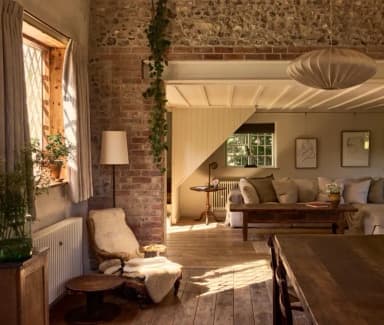
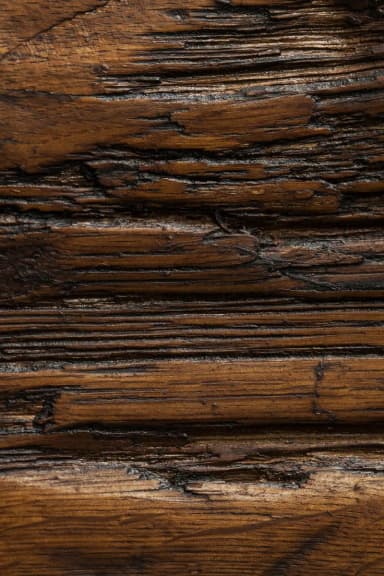
The colour of the wood changes the room as much as the pattern does. Pale parquet suits calm, neutral and Scandinavian interiors. Darker parquet gives a large room depth and contrast. A reclaimed or distressed parquet, worn by a century of feet, adds texture and age that a new floor cannot.

Our parquet panel

Our reclaimed Versailles panel
The main parquet patterns
- Herringbone: rectangular blocks laid at right angles, the end of each block against the side of the next, in a zigzag. The most popular parquet pattern by far. (Is a herringbone floor a good idea?)
- Chevron: the ends of each block are cut at an angle, so the blocks meet point to point and form a continuous V.
- Versailles: large square panels with interlaced diagonal strips, the pattern first laid at the Palace of Versailles.
- Basketweave: small groups of blocks laid in squares, each group at right angles to the next, like a woven basket.
- Brick or block: blocks laid in straight rows with staggered joints, the quietest of the patterns.
Herringbone and chevron also come in double and diagonal versions, and a border of blocks can frame the pattern at the edge of a room.

Our Reclaimed English Herringbone

Our Hand Made French Oak Versailles Parquet
Solid or engineered parquet?
Solid parquet is hardwood all the way through. In a classic room without underfloor heating, it gives you the full depth of the wood to sand and refinish over the decades.
Engineered parquet has a top layer of real hardwood, the part you see and walk on, bonded to a core of plywood or softwood. It moves less as temperature and humidity change, so it is the usual choice over underfloor heating, and a good one in kitchens.
The two look the same once laid. We compare them in detail in Engineered vs Solid Parquet Flooring.
Where to use parquet
Parquet suits almost any room. In a hallway it makes a strong first impression; in a living room it brings elegance; in a bedroom, warmth. In a kitchen, choose a hard-wearing finish and engineered boards if there is underfloor heating.

How to care for parquet
Parquet lasts for generations when it is looked after, and the care is simple.
- Keep grit off it. Vacuum with a soft floor head or dust-mop every day or two. Grit underfoot wears the finish like sandpaper.
- Mop damp, never wet, with a pH-neutral cleaner made for wood floors, and wipe spills up straight away. Standing water makes wood swell.
- Never use vinegar, baking soda, general household cleaners or a steam mop: they dull the finish or force moisture into the joints.
- Feed the finish. Re-oil an oiled floor as soon as it looks dry or the walkways turn pale (how often to oil); a lacquered floor has its own care products.
- Shade it from strong sun, which can lighten or darken wood over time, and put felt pads under furniture legs.
- Sand back only when the finish has worn through. Because parquet is made of small pieces running in different directions, sanding it is a job for a professional.
Step-by-step cleaning by finish is in How to Clean Parquet Floors.
Parquet Flooring FAQs
What is the difference between parquet and wood flooring?
Parquet is a kind of wood flooring. Ordinary wood flooring is laid as long boards; parquet is laid as small blocks or strips in a geometric pattern.
What does parquet mean?
The word comes from the Old French parchet, the diminutive of parc, meaning "a small enclosed space". In English it now means a floor laid in a pattern of wooden blocks.
Is parquet flooring solid wood?
It can be either. Solid parquet is hardwood all the way through; engineered parquet has a hardwood top layer on a stable core. Both are real wood on the surface.
Can you have parquet with underfloor heating?
Yes. Engineered parquet is the usual choice over underfloor heating, because it moves less as the floor warms and cools.
Is parquet hard to look after?
No. Regular vacuuming, a damp mop with a wood floor cleaner, and fresh oil or the right care product when the finish looks tired are all it needs.
Can you get reclaimed parquet?
Yes. We supply reclaimed and antique parquet, including Versailles panels and herringbone blocks with their original patina.
Re:sources
- Wikipedia, Parquet: etymology, and the introduction of parquet de Versailles in 1684.
- Re:claimed Journal, The History of French Parquet.
- Re:claimed Journal, Engineered vs Solid Parquet Flooring.
- Re:claimed Journal, How to Clean Parquet Floors.


