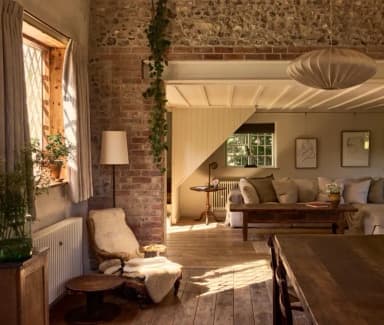



Wood is a much-loved floor: warm underfoot, quiet, and it changes with the light through the day. Its look, feel, colour and care are what a choice should rest on.
A wood floor can be finished pale, mid-brown, grey or very dark, or left close to its natural tone. Whichever you choose, it should suit the whole scheme of the room, because it is the largest surface in it.
The short answer
- Decide on the feeling first. Bright and airy, warm and enclosing, calm, or dramatic: each points to a different range of tones.
- Pale floors reflect light and make a room read larger, especially with pale walls and good daylight.
- Mid tones are the most forgiving and sit well with most furniture and most schemes.
- Dark floors add depth and contrast; they suit large, well-lit rooms better than small dark ones.
- Judge a sample in the room itself, at different times of day, next to your walls and furniture.

A wide grey oak floor under a white kitchen island

Grey boards and a lit fire in a pale sitting room
Floor, walls and ceiling work together
The floor, the walls and the ceiling are read as one. How they meet changes the whole room: the colours you pair, the pattern of the boards and the light that falls on them.
The floor is the room's base, its weight and much of its character. It also sits under everything else you choose, from the furniture to the rugs, so it is where style and use meet.
Never choose in an empty room
A colour that looks right in an empty room can look quite different once the room is lived in. Choose with the rest of the scheme in mind: the furniture you are keeping, the walls, the fabrics.
If you have furniture you want people to notice, a natural or mid tone works as a neutral ground and lets the pieces lead.

A light oak floor under green velvet chairs in a hotel restaurant
Pale wood floors: light and space
A pale floor reflects daylight back into the room, so the space feels larger and more open. If that is the atmosphere you want, keep the floor light and the walls light with it, and let the windows do the rest.
Pale oak shows a little more of daily life on its surface than a mid tone does, so a finish that suits how the room is used matters as much as the colour.

Pale engineered oak under skylights in a kitchen extension

Wide pale oak boards in a piano room
Mid tones: the easiest to live with
A floor that is neither pale nor dark sits in between, and that is its strength. Mid-brown and honey tones go with most furniture, most wall colours and most kinds of light, and they hide everyday dust and wear better than either end of the range.
Grey-brown sits in this middle range too, and gives a calmer, cooler room. Our post on grey wood floors looks at those tones.

Wide brown oak boards along a kitchen table

A mid-toned oak herringbone floor under skylights
Dark wood floors: depth and contrast
A dark floor anchors a room and gives it contrast against pale walls. It reads as richer and more formal, and it suits large rooms with good daylight. In a small room with little light, a very dark floor can close the space in, so it is a tone to use with care.

Burgundy armchairs on wide, weathered grey-brown oak

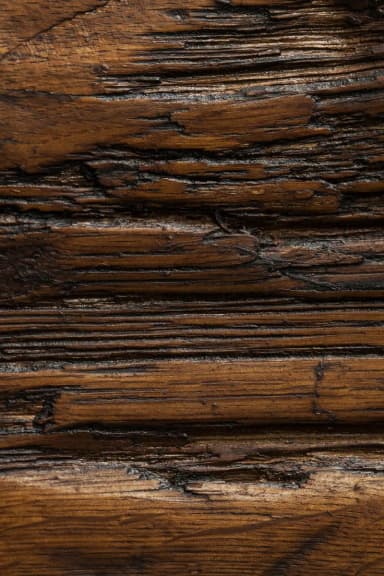
Dark, weathered reclaimed oak boards up close
Test the colour where it will live
Wood changes with the light. A board seen under showroom lamps can look warmer or cooler at home, and a north-facing room shows a different floor from a south-facing one. Look at a sample on the floor of the room, in the morning and in the evening, beside your walls and fabrics. Our sample boxes are made to order for exactly this.
In short
The tones you choose for the floor have a large effect on how a room feels. Pale tones give an airy, open room. Grey tones feel calm and quiet. Browns feel natural and warm. Dark floors bring drama and contrast. Start from the feeling you want, and the colour usually chooses itself.
FAQ
What colour wood floor makes a room look bigger?
A pale floor, especially with pale walls and good daylight. It reflects more light, so the room reads as larger and more open.
Are dark wood floors harder to keep clean?
They tend to show dust and light scratches more than mid tones, because the contrast is higher. Mid-brown and honey tones are the most forgiving.
Should the floor be lighter or darker than the furniture?
Either works; what matters is contrast. Dark furniture stands out on a pale or mid floor, and pale furniture on a mid or dark one. Furniture close to the floor's tone tends to disappear into it.
How do I choose a wood floor colour?
Decide the atmosphere first, then narrow the tones, then test samples in the room's own light, next to your walls and furniture.


