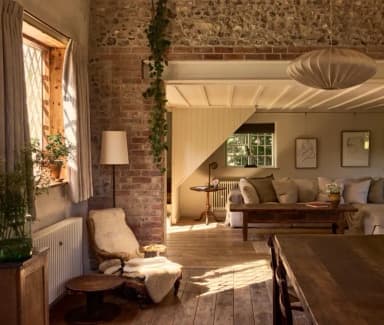



Despite its long-standing popularity, vegan interior design began to draw mainstream attention fairly recently, carried by the vegan food and fashion movements. The Vegan Society's definition reaches well past the plate: a way of living that seeks to exclude, as far as possible, the use of animals for any purpose.
In a home, that means finding alternatives to leather, suede, down, fur, silk and wool, and avoiding products made with harsh chemicals or hidden animal ingredients. The demand is being driven by the high-end market, which is why it has drawn in such creative thinkers and ethical designer-makers.

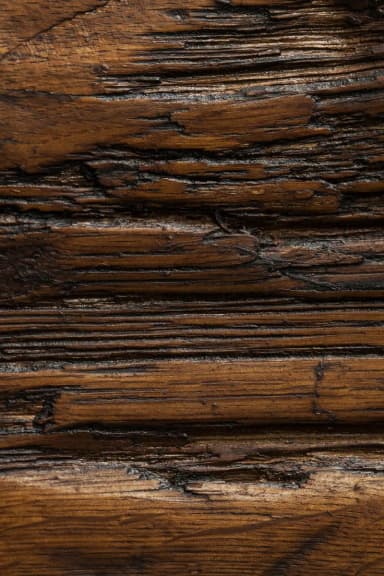
Reclaimed Estate Oak
Is wood flooring vegan?
Wood itself is plant material. No animal is involved in growing an oak, and a bare, unfinished board is as vegan as a linen curtain.
The honest answer about a finished floor lives in the details:
- The finish. Traditional wax polishes often carry beeswax, and some hardwax oils still do. Shellac, used in some sealers and polishes, is secreted by the lac insect. Neither is vegan. Plant-based alternatives, linseed and other vegetable oils, and plant waxes such as carnauba, do the same work and are vegan.
- The fixing. Old floors were sometimes laid with animal glues. Modern flooring adhesives are synthetic.
- The underlay. Wool underlays exist; plant-fibre and synthetic ones do too.
So the question to ask any supplier is simple: what exactly goes onto the wood, and what goes under it? A maker who knows their craft can answer in one sentence. Ask us about any floor of ours, and we will tell you precisely what is in the finish.

Sanding during installation

Herringbone, bespoke finishing
The wider vegan interior
Beyond the floor, designers are replacing silk with bamboo and banana-silk fabrics, growing leather-like materials from mushroom mycelium and fruit waste, and recycling plastics into soft textiles. These plant-based alternatives have become luxurious in their own right; they emulate the texture of the best animal products and often outlast them.
Sourcing them is still not effortless. What goes into a product isn't always revealed or easy to trace, so a vegan home tends to start with small steps: asking questions, sourcing from companies with real credentials, and commissioning local artisans for bespoke pieces. It is a journey that rewards the research. Vegan design is conscious design, and a space aligned with healthful ideals is a calmer one to live in.

Wood and the planet
Caring about animals and caring about their habitats are the same instinct. Timber's ecological questions are deforestation and the loss of biodiversity, so the wood in a vegan home should come from forests that are managed and protected. FSC® certification signifies that the timber used for a floor is replaced and the forest is looked after. Oak does particularly well here: European oak is regularly replanted under forest management programmes.
There is also the route that asks nothing new of any forest: reclaimed wood, timber recovered from old buildings and floors and given a second life. Choosing a floor that is built to last is itself a sustainable act; "sustainable" means capable of being maintained, and that principle should apply to the flooring you choose.

Choose a company that values sustainability
When speaking of vegan interior design, look into the practices of the companies you buy from. Look for materials from responsibly managed forests, ask how products are made, and check for third-party certification such as the Forest Stewardship Council®.

European Mountain Oak, herringbone and planks

Dusheiko House
Vegan flooring FAQs
Is wood flooring vegan?
The wood is. Whether the floor is depends on the finish and the fixing: beeswax and shellac are animal-derived, while plant oils and waxes are not, and modern adhesives are synthetic. Ask the maker what is in the finish.
Which floor finishes are not vegan?
Traditional wax polishes with beeswax, some hardwax oils, and shellac-based sealers. Vegan alternatives include linseed and other plant oils and plant waxes such as carnauba.
Is reclaimed wood a good choice for a vegan home?
It fits the ethic well: reclaimed timber asks for no new felling at all, and it can be finished entirely with plant-based oils and waxes.
What is vegan interior design?
Design that excludes animal-derived materials, leather, wool, silk, down, fur, and the less visible ones in glues and finishes, in favour of plant-based and synthetic alternatives, sourced from companies that can say what is in their products.
Re:sources
- The Vegan Society, Definition of veganism.
- Forest Stewardship Council, fsc.org: responsible forest management certification.
Ask for our FSC® certified products (FSC® C109654).


