

Petrified wood keeps the shape of a tree, sometimes down to the rings and the bark, yet there is no wood left in it at all. Over a very long time, minerals carried in water have taken the place of every cell.
The short answer
- What it is: a fossil. Minerals, mostly silica, have replaced the original wood while keeping its form.
- How old: the petrified wood at Petrified Forest National Park in Arizona is over 200 million years old.
- Is it heavy? Yes. It is almost solid quartz, which is about four times as dense as dry oak.
- Is it strong? It is hard (quartz scores 7 on the Mohs scale) but brittle, and it fractures easily under stress.
- Is it rare? The best-known deposits are protected, and taking wood from Petrified Forest is against the law. Pieces sold in shops come from private land.
How does wood become petrified?
At Petrified Forest, the National Park Service explains, logs washed into an ancient river system more than 200 million years ago and were buried quickly and deeply enough to slow their decay. Silica, dissolved from volcanic ash, was then absorbed into the porous wood over hundreds and thousands of years, and crystallised as quartz in its place.
The result is a stone copy of the tree. The rainbow of colours comes from impurities in the quartz, such as iron, carbon and manganese.

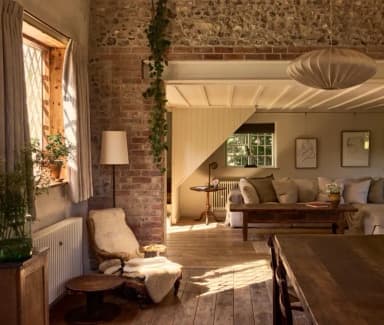
Our reclaimed oak
Is petrified wood heavy?
Very. The petrified wood of Arizona is almost solid quartz, and quartz has an average density of about 2.62 grams per cubic centimetre. Dry English oak weighs about 675 kilograms per cubic metre, or 0.68 grams per cubic centimetre. So a piece of petrified wood weighs roughly four times as much as the same piece of oak.
Is petrified wood strong?
It is hard: quartz scores 7 on the Mohs scale of mineral hardness, so it takes a high polish. But it is also brittle: the quartz in petrified wood fractures easily when it is put under stress.
Is petrified wood rare?
Petrified wood is not unique to Arizona, but the best-known deposits are protected. At Petrified Forest National Park it is against the law to remove petrified wood, and the park protects just over 20% of the original deposit. The pieces sold in gift and rock shops come from private land outside the park.

Petrified wood and old wood: what is the difference?
Petrified wood is stone in the shape of a tree. It no longer bends, breathes or moves with the seasons, and it is worked with stone-cutting tools.
Old timber is different. A reclaimed oak board from an eighteenth-century barn is still wood: it can be sawn, planed, oiled and walked on, and it carries the marks of its past life on its surface. If you are drawn to petrified wood for its sense of age, that is the quality reclaimed wood offers in a floor. Our guide to reclaimed wood explains where it comes from, and our sunken and submerged wood guide covers timber that has been kept for decades under water and is still wood.
Can you have a petrified wood floor?
Petrified wood is used in slices and slabs, as you would use stone, for tables, decorative panels and jewellery. Because it is hard and brittle, it is cut and polished like stone rather than laid like timber. For a floor that shows real age and still feels like wood underfoot, look at antique and reclaimed oak.

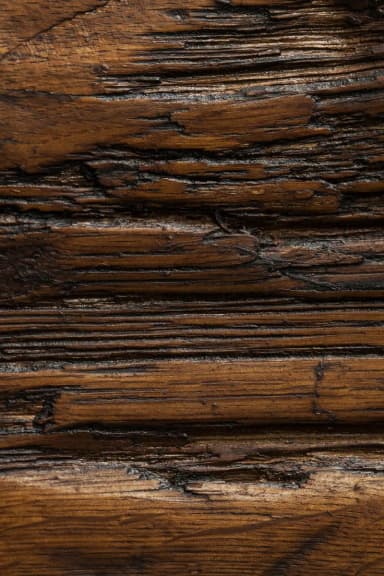
Our aged oak, close up

Weathered reclaimed pine
Petrified Wood FAQs
What is petrified wood made of?
Mostly silica in the form of quartz. The petrified wood of Petrified Forest National Park is almost solid quartz, coloured by iron, carbon and manganese.
How old is petrified wood?
It depends on the deposit. The petrified wood at Petrified Forest National Park is over 200 million years old.
Is petrified wood heavy?
Yes. Quartz averages about 2.62 g/cm³, around four times the density of dry English oak at 0.68 g/cm³.
Is petrified wood rare?
The best-known deposits are protected: collecting it at Petrified Forest National Park is against the law, and the pieces sold in shops come from private land.
Is petrified wood still wood?
No. It is a fossil: minerals have replaced the wood while keeping its shape. Reclaimed timber, however old, is still wood.
Re:sources
- National Park Service, Petrified Forest, Petrified Wood: formation, age, colour and hardness.
- National Park Service, Petrified Forest, Frequently Asked Questions: collecting and the extent of the deposit.
- Webmineral, Quartz: density and Mohs hardness.
- The Wood Database, English Oak: average dried weight.


