

%2520(2).jpeg&w=2048&q=75)

Home Renovation
New Engineered Flooring
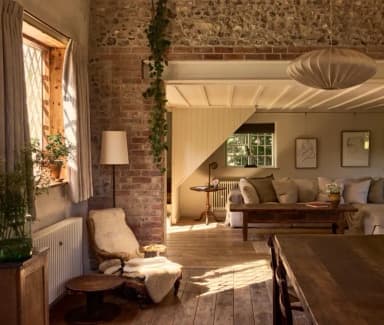
Late afternoon light plays with stray specks of dust in the air. A curtain sways slightly, casting long shadows across wooden floors, bringing life to a gentle breeze, the smell of fresh linen in the air. The moment seems to exist outside of the hurried world beyond. Here there are no car horns, no encroaching deadlines, no never-ending hum of a sleepless city street. Here, it is alive with something older, something craved by the soul; here it is alive with silence. Here you can rest. Here, here it is quiet.
The modern world is filled with sound, with a never-ending cacophony of noise, but we are not creatures that were made for a constant assault on the senses. By embracing an architecture of silence in the spaces we inhabit we also embrace a sense of calm; we create a place to recharge, and build personal sanctuaries that encourage introspection and reconnection with each other, the lives of a space and the materials in it, and our sense of self.
From the artistry of world-renowned architects that understand the power in welcoming the void to the ancient wisdom of Japanese philosophy, in this journal article we explore how silence can be invited into a space, and why it has become a necessity in the over-abundance of the modern world.

Our Engineered New Oak Flooring

Our Engineered New Oak Flooring
Abundance, not absence
There is no absence in silence; silence is something of abundance. Silence is what exists before sound has the chance to make an entrance and is life without all the distraction of noise.
To bring the art of silence into a space, what silence actually means, and all the presence of what silence holds space for, needs to be allowed inside.
The Japanese principle of Ma is one that embodies this school of thought. By embracing negative spaces, whether this is the space between objects, the quiet between sounds, or the stillness between movements, Ma makes space for a palpable entity of being, rather than viewing pauses in time and space a reduction that needs to be filled. In Ma, this space allows the way towards introspection and deeper thinking.
In Japanese homes and spaces, furniture is kept low to the ground to create space that doesn't ask to be filled. Natural materials are prioritised and furniture that has dual purposes is used to reduce physical clutter.
The concept of Ma as a design principle is one that Re:claimed embodies in its craftsmanship, and one that can be seen throughout Japanese architecture. Simplicity, the natural world, and negative spaces are embraced here, though the aim is not minimalism. It is calm: inviting the space in between to exist without the need to fill it.
.jpg&w=1920&q=75)
Slowness Takes Time
%2520(3).webp&w=3840&q=75)
Our Reclaimed Wood
Embracing the void
Using space and silence as an architectural principle is not exclusive to Japan. The famous Guggenheim Museum in Bilbao, designed by Frank Gehry, is a grand example of how leaving room for silence, space, and simplicity can be used to create a powerful statement.
The use of negative spaces and expansive voids is designed to encourage introspection and allow moments of calm. This negative space is juxtaposed against the dramatic organic lines of the architecture which work with the changing light of the seasons to create an atmosphere that evolves with the environment, rather than trying to control it.
Louis Kahn is another example of a designer that has mastered the art of silence. After a meeting with Dr. Jonas Salk, Kahn mused,
'Science finds what is already there, but the artist makes that which is not there.'
This philosophy of bringing meaning to emptiness is something that is present throughout Kahn's work. The scale and weight of Kahn's buildings are held on a pendulum opposite voids, open spaces, intentionality with proportions, and areas that let empty vastness exist without rushing to fill it.
Kahn worked with asymmetry as a design principle and stripped unnecessary ornamentation to create spaces that feel grounded and in collaboration with the surrounding world; strategically using space, silence, and weight Kahn creates a sense of depth and meaning that transcends construction and moves into the world of psychology and artistry.
Silence and light and connection to past and present
Inspired by Hinduism, Kahn saw silence and light as integral parts of eternity and life and infused this concept in his architectural designs. Architecture gave a tangible meeting place for light, the measurable and the maker of all material, and for Kahn, the place between silence and light was where order could be found.
He celebrated materials like wood and concrete, or as he called it 'molten stone', to establish a record of light, time, and being, creating a connection to the present, past and future.
Quality and craftsmanship are concepts embraced by designers like Kahn and Gehry and integral aspects of why the silence of architecture works in a space. In this silence the stories of quality craftsmanship can be heard. In the silence, a reclaimed floorboard becomes a connection to the world, to craftsmanship, to the past lives it has witnessed walk across it, and a path to a more thoughtful way of life. Much like Kahn's use of materials to record the past and connect with the present, the timber Re:claimed works with is chosen to create that same connection to time and space.
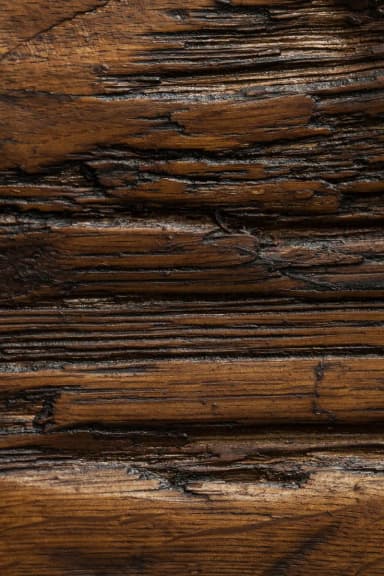
That timber has already kept time somewhere else: in mill floors and railway sleepers, in the beams of houses and castles, in cabins that stood through weather no new board has met. A floor made from it does not perform age. It carries the marks of the century it already spent being walked across, and those marks are quiet in a way that new timber cannot be.
When noise, whether this be visual noise or audible noise, is stripped from a space, the quality and intentionality of the materials and the architecture is what is left.
Capturing the silence
Capturing the architecture of silence
Capturing the architecture of silence requires rethinking what thoughtful design means. A space that understands the power of silence is crafted with a quieter approach, an approach that leaves space for peace, for understanding, and for embracing a new way of thinking.
Reducing visual noise and simplifying designs with natural materials that age with grace is a core part of what it means to capture the architecture of silence. Japanese tea houses use sliding paper screens rather than glass windows to reduce visual noise by filtering light into the space, Scandinavian architecture is famous for its use of scaled back colour palettes and natural materials to reduce visual noise and create calm.
Natural bricks in Vietnam offer both a sustainable approach and a material that ages with grace in the harsh sun, providing natural ventilation and connection to the world outside. At Re:claimed, working with timber that has already lived brings material honesty and a second life to the materials, offering an avenue to quiet introspection.

Our New Engineered Oak
The power of nature to create calm in a loud world
Re:claimed's philosophy is that nature, history, and craftsmanship need to be invited indoors.
By capturing the essence of silence and reflection through the use of natural materials, the body and mind have time to rest. Touching wood induces psychological relaxation, while natural brown stone in a home helps in stress recovery. Making space for a slower way forward means a quiet celebration of the textures of nature: the soft grain of wood flooring, the cooling touch of stone, the cosy embrace of wool, an abundance of natural light, and materials that still hold the soul of what they once were.
Silence is also a matter of pace. Every floor Re:claimed makes is made to order at the workshop in Cheshire, which means no board is cut before someone has chosen it, and nothing is produced to sit in a warehouse waiting for demand. There is no fast fashion here. Timelessness takes time.
.jpg&w=1920&q=75)
The Power Of Nature
Conclusion: The power of quiet
As the world becomes louder, embracing the architecture of silence has never been more important. Philosophies like Ma and the architecture of master designers like Kahn lean into the idea that silence, stillness, and space create room for introspection, and for a connection with nature and with the inner self.
By using voids, natural materials, and reducing visual noise, silence and calm are invited indoors, offering the chance for the mind and body to rest and recharge. The architecture of silence has never been about absence, but instead about holding space for everything that exists without the distraction of noise.
Crafting a space around silence gives life to light, to texture, to space, to time, and to history. This architectural shift to embrace silence acts as a new way forward that has its origins in old wisdom. It is a peaceful rebellion against the fast pace and relentless 'go' of the modern world, and is a quiet statement to the idea that life doesn't have to be so loud.

Our New Mountain Oak
Re:sources
- Rice Paper Magazine on the aesthetic of space and time
- Rethinking the Future on negative spaces
- National Library of Medicine on the impacts of touching wood
- World Archi Design on architecture rooted in silence and light
- Architizer on vernacular in Vietnam
- XUL Architecture on the best materials for a feel good home
- Silence and Light with Kahn
- Icon Eye on Louis Kahn
- Rost Architects on contemplations of the built world
- Disegno on the beginnings of architecture


