
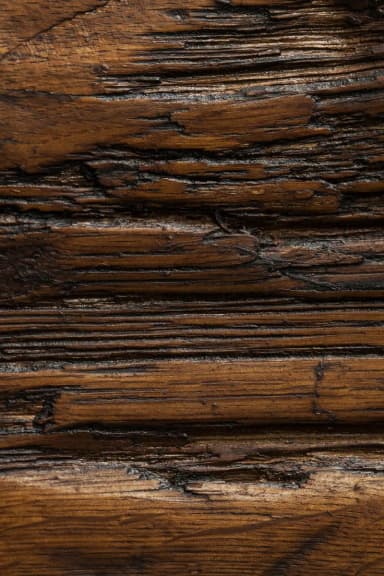




Our Reclaimed Herringbone Oak
Oak has been used in building, flooring and furniture for about as long as people have worked wood. On a small sample, American oak and European oak can look almost alike. Across a whole room, the difference shows, and for a floor that should outlast you it is worth knowing which one suits the room, the way you live in it and the look you have in mind.
The short answer
- Which is better for floors? Both make fine floors. American white oak is harder; European oak moves less with the seasons, so it suits wide boards and underfloor heating well.
- Species: European oak is pedunculate oak (Quercus robur), also called English oak, or sessile oak (Quercus petraea). American white oak is Quercus alba; American red oak is Quercus rubra.
- Colour: European oak and American white oak are both light to medium brown, often with an olive cast. American red oak has a reddish cast.
- Hardness: 1,350 lbf on the Janka scale for American white oak, 1,220 lbf for red oak and 1,120 lbf for European oak.
- Movement: about 13.0% total shrinkage from green to oven-dry for European oak, against 16.3% for American white oak.
- Red or white? European oak belongs to the white oak group, alongside American white oak.
What is American oak?
American oak is the name the trade gives to the oaks of North America. Flooring draws on two groups. American white oak, chiefly Quercus alba, grows across the eastern United States. American red oak, chiefly Quercus rubra, grows in the north-eastern United States and south-eastern Canada.
The two groups behave differently. White oak heartwood has tyloses, growths that plug its pores, and it is very durable; red oak lacks them and does not resist rot as well. When people compare American and European oak for a floor, the fair match is usually American white oak.
What is European oak?
European oak is the oak of Europe: pedunculate oak, Quercus robur, and sessile oak, Quercus petraea, two close relatives that grow across most of the continent. English oak and French oak are not separate species. They are the same European oak, named for the country where it grew.
European oak belongs to the white oak group and shares many of its traits with American white oak. So although we compare them as a pair, these are different species, not one tree grown on two continents.

Our Reclaimed European Oak

Our Reclaimed French Oak
What colour is American oak and European oak?
European oak heartwood is a light to medium brown, often with an olive cast, and varies a fair amount from board to board. Under oil or wax, and with years of light, it tends to deepen towards the warm golden brown most people picture when they think of an old oak floor.
American white oak sits in the same range of browns, also with an olive cast, but usually reads more even. American red oak is the one with the reddish, sometimes pinkish, cast, and it stays visible under a clear finish. Colour alone is not a reliable way to tell the oaks apart, and the finish, the cut and the age of the wood all change it. Choose by how the colour sits with the stone, metal and fabric around it.
Which is harder and more stable?
On the Janka scale, which measures the force needed to press a steel ball halfway into the wood, American white oak scores 1,350 lbf, red oak 1,220 lbf and European oak 1,120 lbf. All three are hard enough for a well-used home, and a finish, a lived-in patina or a reclaimed surface changes how marks read far more than that difference does.
Movement matters more to a floor. Wood swells and shrinks as the air around it gets damper or drier. From green to oven-dry, European oak shrinks about 13.0% in volume, American red oak about 13.7% and American white oak about 16.3%. Less shrinkage generally means flatter boards and smaller seasonal gaps, which counts for wide boards and for floors over underfloor heating. If you are choosing between constructions as well as species, our guide to engineered vs solid parquet covers the other half of the decision.

Our European Oak
Grain pattern
American white oak is known for a clean, fairly even look with straighter grain, so it suits rooms where the floor should stay quiet and add little character of its own.
European oak tends to show more movement in its figure: wavier grain, more variation between boards and a stronger sense of the tree. Both oaks have large rays, and when the log is quartersawn these appear as pale, ribbon-like flecks across the grain, known as medullary rays.

Our Reclaimed French Oak

Our Antique European Oak
Board length and width
European oak is often chosen when a design calls for long, wide planks. Because it moves comparatively little, broad boards stay flatter, and in a large room they mean fewer joints and longer runs of unbroken grain. That is a large part of why old country-house floors feel so calm. We cut our reclaimed and new European oak with this in mind, as plank floors and in herringbone, chevron and Versailles patterns.
Where does the best European oak come from?
There is no official ranking of countries. Oak is grown and milled for flooring across Europe, and France holds one of its great oak resources: in French forests, broadleaved trees, mainly oaks, make up 64% of the standing timber.
More than the country, a good board depends on the tree it came from and on how it was sawn, dried and finished. Our Hand Made French Oak is handcrafted in France from naturally felled, old-growth oak with a refined, slow-grown grain. Our 18th Century Antique European Oak is reclaimed from barns, mills and other old buildings across France and wider Europe, and finished in our Cheshire workshop. Oak grown in England is a different story: it is rarely available as flooring today, for reasons we explain in why English oak is so rare.


Which oak is best for floors?
Both make fine floors. If you want a calm, even surface and the hardest wood, American white oak is a sound choice. If you want warmth, variation and boards that move less through the seasons, European oak has the edge, and it is the oak we work with most, new and reclaimed.
In the end the decision rests on the room, the way it is lived in and the look you are after. A floor cut from oak can last for generations when the species, the construction and the finish are chosen well.
See it in your own light. Oak changes with the light it is laid in, so the surest way to choose is to hold the boards in the room itself. Our Introductory Sample Box holds 15 curated wood samples, and its £35 is redeemed against your final flooring order. You can also see full-size boards in our showrooms in Mayfair and Cheshire, or tell us about your project.

Our English Reclaimed Oak Herringbone Parquet

Our English Reclaimed Oak Herringbone Parquet
American Oak vs European Oak FAQs
Are American oak and European oak the same species?
No. European oak is Quercus robur or Quercus petraea; American white oak is Quercus alba and American red oak is Quercus rubra. They belong to the same genus, which is why they look alike, but they are different species.
Is European oak a red oak or a white oak?
A white oak. European oak belongs to the white oak group and shares many traits with American white oak, including its olive-brown colour.
Is English oak the same as European oak?
Yes. English oak is pedunculate oak, Quercus robur, one of the two species sold as European oak. French oak is the same European oak, grown in France.
Which is harder, American or European oak?
American white oak. It scores 1,350 lbf on the Janka hardness scale, against 1,220 lbf for American red oak and 1,120 lbf for European oak.
Which oak moves less with changes in humidity?
European oak. Its total shrinkage from green to oven-dry is about 13.0%, against about 16.3% for American white oak, so it tends to stay flatter and open smaller gaps through the seasons.
Is oak a hardwood?
Yes. American and European oak are both hardwoods, from broadleaved trees.
Is European oak a good choice over underfloor heating?
Yes, in an engineered construction. Its lower movement helps, and an engineered board is built to stay stable as the floor warms and cools. Keep the floor at or below 27°C, the maximum the floor covering industry works to.
Why is European oak used for wide floorboards?
Because it moves comparatively little, which keeps broad planks flatter. Wide boards also mean fewer joints, so the grain reads as one surface across the room.
Re:sources
- The Wood Database, White Oak (Quercus alba): distribution, colour, hardness, shrinkage and durability.
- The Wood Database, Red Oak (Quercus rubra): distribution, colour, hardness and shrinkage.
- The Wood Database, English Oak (Quercus robur): white oak group, distribution, colour, hardness and shrinkage.
- French Ministry for Ecological Transition, Les forêts en France: synthèse des connaissances en 2022: oak's share of French standing timber.
- Altro, Flooring and underfloor heating: technical installation guide: the industry-agreed 27°C maximum.


