

European oak is the wood most of us picture when we think of an old floor: the honey-coloured boards of a farmhouse, the worn planks of a townhouse hall, the parquet of a château. It is the same wood we work with most, new and reclaimed.
The short answer
- European oak is mainly Quercus robur (English or pedunculate oak), with Quercus petraea (sessile oak) from the same forests.
- It is hard-wearing. The Wood Database gives Quercus robur a Janka hardness of 1,120 lbf, a little softer than American white oak at 1,350 lbf, and plenty for a family home.
- It comes solid or engineered. Solid boards can be sanded many times; engineered boards are steadier over concrete and underfloor heating.
- It takes colour well. Oak's grain and tannins take oils, stains and hand-made finishes, from pale to very dark.

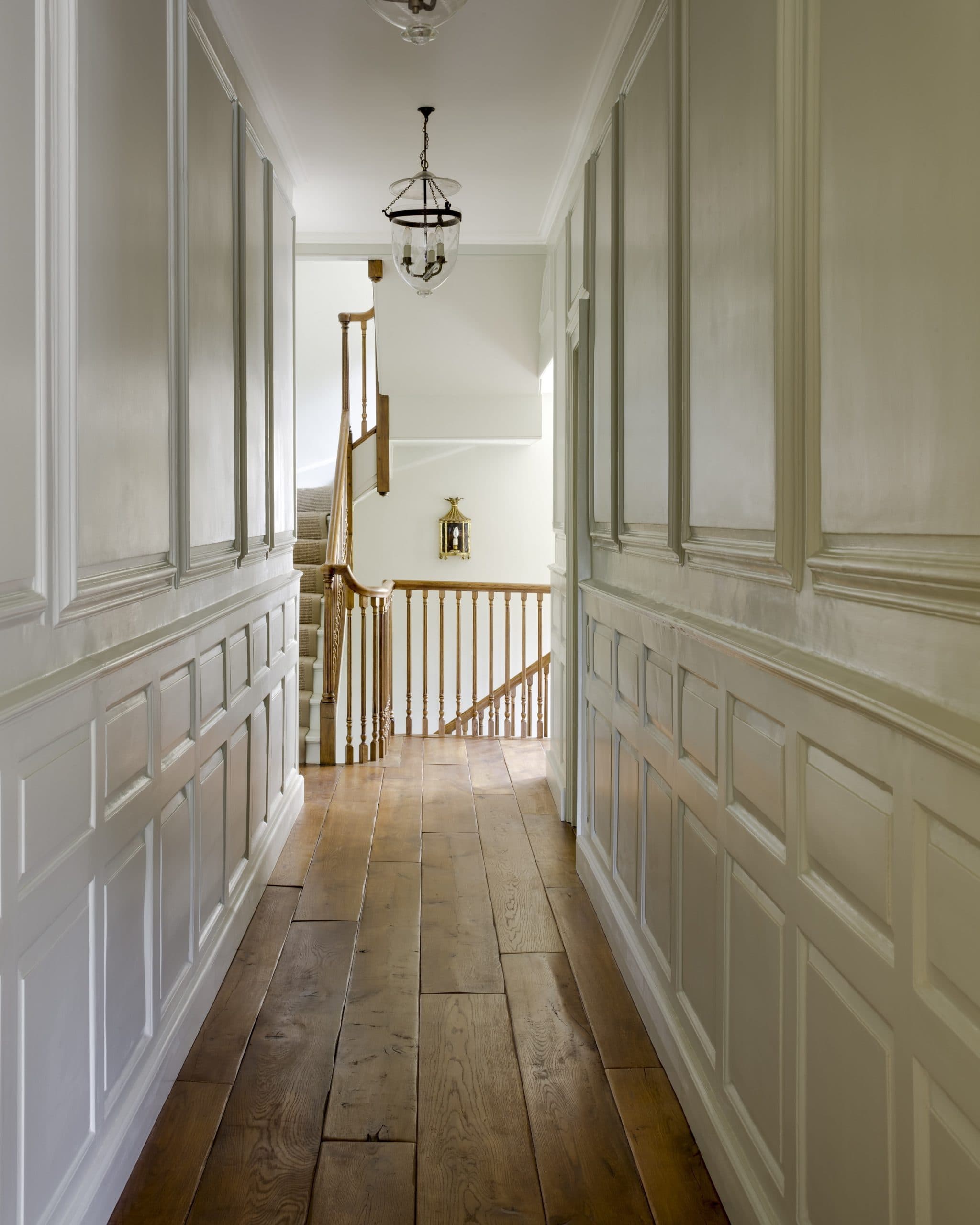
Wide polished oak boards in a drawing room

The same oak floor in a bedroom with tall sash windows
Why choose European oak?
European oak is the most versatile of floors. It sits as easily in a minimal modern room as in a rustic one, and it has outlasted every passing trend in interiors.
Each board has its own pattern and shade, from honey to deep, earthy brown, with the flecks and rays that oak is known for. No two floors look the same, and each brings its own warmth to a room. Our post on American and European oak compares the two in detail.

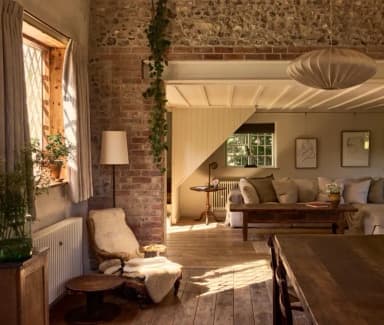
Reclaimed Manoir Oak planks in a London living room, open to the courtyard
The strength behind the beauty
Oak is built to last. A dense, hard-wearing hardwood, it stands up to daily life (children, pets, busy hallways) and wears slowly rather than suddenly. Our guide to hardwood and softwood floors explains why that matters underfoot.
On the Janka scale, which measures how hard a wood is to dent, Quercus robur scores 1,120 lbf. That makes it slightly softer than American white oak, and harder than the pines laid in many old houses.

Solid European Mountain Oak in a sitting room with bookshelves

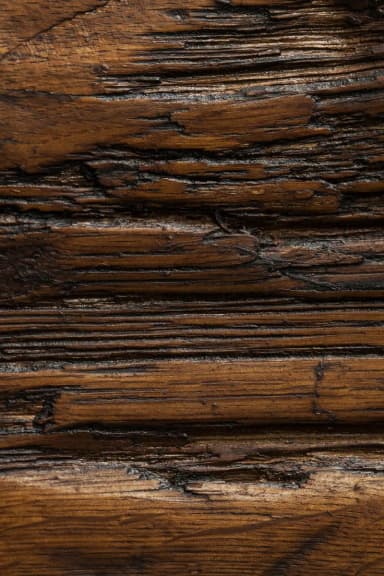
Weathered antique European oak planks up close

Bespoke European Aged Oak herringbone under skylights

Cabin Wood engineered European oak laid in chevron
The choices in European oak
- Engineered oak. A layer of oak on a core of birch plywood. Our planks are 12 mm (3 mm of oak on 9 mm of plywood), 16 mm (4 mm on 12 mm) or 20 mm, and they suit underfloor heating with the floor surface kept at 27°C or below. Our guide to engineered wood flooring explains how it is made.
- Solid oak. A single piece of oak, 20 mm thick in our range, that can be sanded and refinished many times over its life.
- Wide plank oak. Wide boards show more of the grain and make a room feel calmer and larger. Our Originals come in 185, 220 and 260 mm widths.
- European mountain oak. European oak grown slowly in mountain forests, with a tight, even grain. Our new oak comes mostly from well-managed woodlands in Croatia, France and Germany. More in what is European mountain oak.
- Reclaimed European oak. Boards taken from old buildings, with patina and history no new board has.

New Orleans engineered European oak beside a window

New Orleans engineered European oak in a dining room
Solid or engineered?
The choice depends mostly on what sits underneath. Solid oak can be sanded many times over a long life. Engineered oak is steadier as humidity changes, and it is the usual choice over concrete or underfloor heating. Our post on engineered or solid wood flooring goes through it step by step, and the thickness guide explains what each board suits.

Designing with European oak
- Colour schemes. Oak sits well with warm and cool palettes alike. Pale oak opens a room; darker finishes add depth.
- Furniture and decor. Choose pieces that suit the floor's character, modern or traditional.
- Light. Daylight brings out oak's grain and rays; plan lamps to do the same in the evening.
- Pattern. The same oak can be laid as planks, herringbone, chevron or panels, each changing the feel of a room.
In short
European oak combines character with strength. Engineered for steadiness or solid for a long life of sanding, new or reclaimed, it gives a room a floor that will last and age well.
FAQ
Is European oak good for flooring?
Yes. It is hard-wearing, takes finishes well and comes in many widths, patterns and colours, solid or engineered.
Is European oak harder than American oak?
No, slightly softer. The Wood Database gives European oak (Quercus robur) 1,120 lbf on the Janka scale and American white oak 1,350 lbf. Both make durable floors.
Is European oak suitable for underfloor heating?
Engineered European oak is the usual choice. Our engineered planks suit underfloor heating with the floor surface kept at 27°C or below.
How long does an oak floor last?
With care, many decades. Solid oak and thick-topped engineered oak can be sanded and refinished, which renews the surface.
Re:sources
- The Wood Database. English Oak (Quercus robur).
- The Wood Database. White Oak (Quercus alba).


