



Our Parquet
Walk through an old English house and the floors tell you when each room was made. Board widths narrow, oak gives way to pine, borders appear around long-vanished carpets, and parquet arrives in the grandest rooms first. This is a short history of those floors, period by period.
The short answer
- Tudor and Jacobean (1485-1625): stone, brick or tile downstairs; oak, occasionally elm, boards upstairs, sometimes up to 60 cm wide.
- Seventeenth century (1625-1714): oak still dominant, planks often more than 30 cm wide; parquetry and marquetry fashionable in grand houses.
- Georgian (1714-1811): Baltic fir and pine from the mid 1700s, with narrower boards of 15-20 cm; late in the century, borders stained and polished to frame carpets.
- Victorian (1837-1901): plain pine floors covered with rugs, the surrounds stained and polished with beeswax and turpentine.
- Edwardian and interwar: parquet still popular, and by the 1920s and 1930s a standard treatment.
Tudor and Jacobean floors
In Tudor and Jacobean houses, ground floors were usually flagstone, brick or tile, and wooden floors were laid on the upper storeys. The timber was usually oak, occasionally elm, and boards up to 60 cm wide were not unusual.
The seventeenth century
Stone flags still covered the principal and service rooms on the ground floor, while wooden floors predominated upstairs. Oak remained the first choice, in planks often more than 30 cm wide. The century's new luxury was pattern: marquetry and parquetry became fashionable in grand houses, and Queen Henrietta Maria brought French parquetry to the English court in the late 1620s.

Our Hand Made Versailles Panels, South London

Our Antique European Oak
Georgian floors
In Georgian houses, entrance halls were often stone, laid over joists, with wooden floors in the other rooms. By the mid 1700s Baltic fir and pine were being used, and boards became much narrower, usually 15 to 20 cm wide. Oriental, Turkish and floral carpets spread through the house, and in the late eighteenth century the boards around them were stained and polished to frame the carpet. Marquetry and parquetry stayed in fashion in the finest rooms.
In the Regency years that followed, wooden floors became the standard throughout the house, and boards were stained, polished, painted or varnished.
Victorian floors
Most Victorian houses had plain pine floors, usually covered with rugs, with the exposed surrounds stained and polished with beeswax and turpentine. Some borders were stencilled as an inexpensive alternative to parquetry, and in the 1860s floors painted in Indian reds and deep blues became fashionable. Much of the pine imported from the Baltic in the nineteenth century came from first-growth forests.

Our Reclaimed Mid Century Pine, 100-year-old pine from Britain's historic cotton mills
Edwardian and interwar parquet
Parquet stayed popular into the Edwardian years, built from blocks about 2.5 cm thick laid on a cement base covered in bitumen. In suburban houses it was often made of panels of thinner blocks fixed to a cloth backing. By the 1920s and 1930s, parquetry had become a standard treatment, and more elaborate patterns spread with it.
Stately home style flooring today
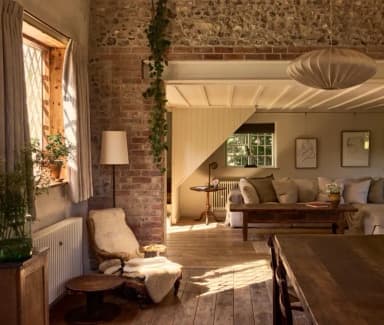
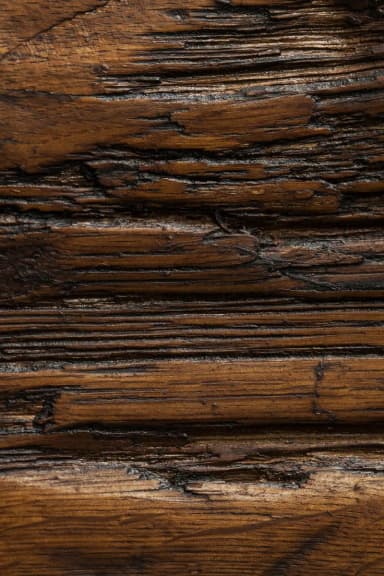
The floors people think of as "stately home" floors are usually two things: wide, aged oak boards, and parquet in patterns such as herringbone, chevron and Versailles panels. Both can be brought into a house today without imitation, because reclaimed timber already carries the age. Antique oak boards keep their softened edges and patina; reclaimed parquet blocks show a different history in every piece.
In a period house, a reclaimed floor can match what was there. In a new one, it brings the same depth of colour and wear that only time gives. Our guide to reclaimed wood explains where it comes from, and our reclaimed floors show the range.

Our Antique Oak Versailles Panels

Our Antique Oak Versailles Panels
Period Flooring FAQs
What flooring did Victorian houses have?
Mostly plain pine boards, covered with rugs, with the exposed edges stained and polished with beeswax and turpentine. Some had stencilled borders, and in the 1860s painted floors in Indian reds and deep blues were fashionable.
What flooring did Georgian houses have?
Stone in the entrance hall and wooden boards elsewhere. From the mid 1700s these were usually Baltic fir or pine, 15 to 20 cm wide, and late in the century the boards around carpets were stained and polished.
When did parquet come to England?
Parquetry was fashionable in grand seventeenth-century houses, and Queen Henrietta Maria brought French parquetry to the English court in the late 1620s. It was still popular in Edwardian houses and became a standard treatment in the 1920s and 1930s.
How wide were old English floorboards?
Tudor and Jacobean oak boards could be up to 60 cm wide, and seventeenth-century planks were often more than 30 cm. Georgian pine and fir boards were much narrower, usually 15 to 20 cm.
How can I get a stately home style floor?
Choose wide, aged oak boards or parquet in a classic pattern such as herringbone, chevron or Versailles panels. Reclaimed timber brings genuine age and patina rather than an imitation of it.
Re:sources
- The Building Conservation Directory, Timber Floors, Jasper Weldon, 2009: English floors by period.
- Re:claimed, Herringbone Flooring: parquet at the English court, with its sources.


