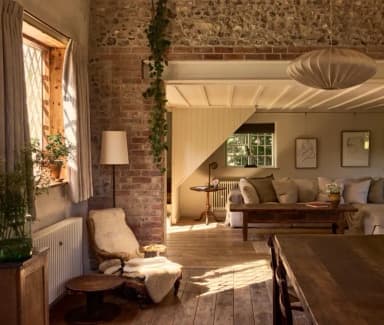




Traditional White, Harvested Engineered Oak
The kitchen is the heart of most homes: where we cook, gather and linger over shared meals. It is also the room that takes the most punishment, from spilt juice at breakfast to muddy paws and a child's game on the floor.
So it needs a floor that looks beautiful and copes with ordinary life. Wood can do both. Most of today's finishes suit a kitchen, provided you wipe up spills and keep to a simple maintenance routine.
The short answer
- Is wood a good idea in a kitchen? Yes, with the right construction and finish, and spills wiped up promptly.
- The best choice for most kitchens: engineered oak. It moves less than solid wood as steam, heat and humidity come and go.
- The finish matters as much as the wood: a hard-wearing oil can be repaired patch by patch; a lacquer gives a harder film but is harder to repair.
- Underfloor heating, common in kitchen extensions: choose engineered and keep the floor at or below 27°C.
- Character helps: oak's grain, and the patina of reclaimed or aged boards, disguise the small marks every kitchen floor collects.
Which wood is best for a kitchen floor?
Wood is warm and natural, and it suits modern and traditional kitchens alike. Few surfaces match the look and feel of real hardwood underfoot.
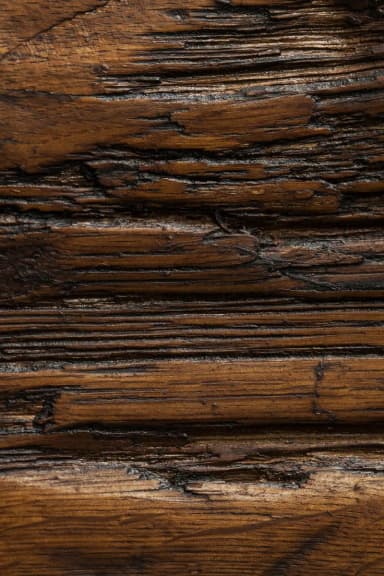
Oak is the natural first choice. It is hard-wearing, and its grain and texture help disguise the small dents and scratches a kitchen floor will collect over the years. Reclaimed and aged oak go further: a floor that already carries the marks of a long life takes new ones in its stride.

Our Bespoke European Aged Oak Herringbone, Manchester

Our Reclaimed Pine and Oak Herringbone
Solid or engineered wood in a kitchen?
Wood is a natural material: it swells and shrinks as temperature and moisture rise and fall, and a busy kitchen full of steam and heat is where that shows most. Solid boards can cup or open up gaps.
That is why engineered wood is usually the best choice for a kitchen. It still moves, but far less than solid wood, and it reacts more slowly to changes in humidity. It also copes better over a concrete slab, where conditions in the subfloor change through the year, and it is the right choice over underfloor heating. Our guide to engineered vs solid parquet goes into the detail.

It's all in the finish
The finish is often left until the last minute, and in a kitchen it shouldn't be. Once the floor is laid, its surface needs sealing so water and stains can't soak in, and the finish has to stand up to water because there will be water on the floor.
- Oil finishes: UV-cured oils are hard-wearing, and local damage is easy to put right with fine sandpaper, a little stain if needed and a renewer oil. An oiled floor is the best choice for a kitchen where spills are wiped up quickly. Our in-house oils and finishes are made to work in kitchens and bathrooms.
- Lacquer: a clear, hard film that is simple to keep clean, but a worn patch is harder to repair invisibly.
- Wax: beautiful on antique floors, but in a kitchen it needs more care. See our guide to caring for a waxed floor.
Whichever you choose, apply enough coats to protect the wood, and pick a finish that is strong, easy to restore and easy to renew.

Our Driftwood Oak

Our Driftwood Oak
Looking after a wood floor in a kitchen
- Every day: sweep or vacuum with a soft floor head, and wipe up spills at once. Never let water stand on the floor.
- Mopping: a damp mop, never a wet one, with a pH-neutral cleaner, and never a steam mop.
- By the sink and the oven: a washable mat catches drips and splashes where they happen most.
- Furniture: felt pads under chairs and stools, and lift appliances rather than dragging them.
- Maintenance: on an oiled floor, apply a hard-wax maintenance oil every 6 to 10 months. Osmo and Woca both make good ones.
A simple test: pour a few drops of water on the busiest part of the floor. If they bead up, the finish is doing its job. If they soak in, wipe them up straight away and plan a fresh coat of a water-repellent finish.

Kitchen floor ideas
A herringbone or chevron floor gives a kitchen a sense of movement and works beautifully around an island; our guide to parquet flooring in the kitchen has ideas. Wide boards laid the length of the room make it feel longer and calmer. And if the kitchen opens into a dining or living space, running the same floor through ties the rooms together.
Wood Flooring for Kitchens FAQs
Is wood flooring a good idea in a kitchen?
Yes. With an engineered construction, a water-resistant finish and spills wiped up promptly, a wood floor will last for decades in a kitchen.
Which is better for a kitchen, solid or engineered wood?
Engineered, in most kitchens. It moves less with the steam, heat and humidity of cooking, and it suits concrete subfloors and underfloor heating.
What is the best finish for a kitchen wood floor?
A hard-wearing oil is the most practical, because a damaged patch can be repaired on its own. Lacquer gives a harder film but is harder to repair invisibly.
Can you have a wood floor in a kitchen with underfloor heating?
Yes, choose engineered wood and keep the floor at or below 27°C, bringing the heating up slowly the first time.
How do you protect a wood floor in a kitchen?
Wipe spills at once, use a damp rather than wet mop, put mats by the sink and felt pads under furniture, and keep the finish topped up.
Re:sources
- Re:claimed Journal, Engineered vs Solid Parquet Flooring: how the two constructions cope with heat and humidity, and the 27°C limit.
- Re:claimed Journal, How to Clean Parquet Floors: day-to-day cleaning by finish.


