
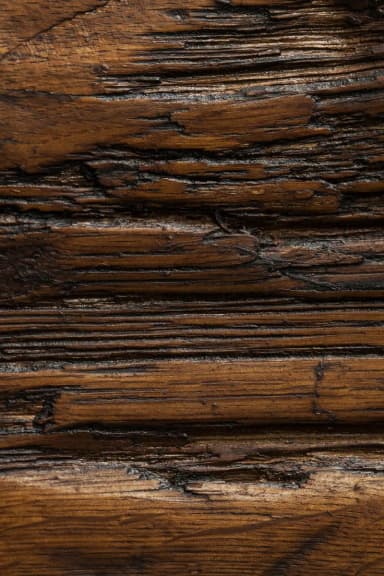




Reclaimed oak is still cut and graded by hand in our Cheshire workshop.
In our Cheshire workshop, very little about the way a floor is made has changed. Reclaimed oak still arrives with old nails in it, still dries slowly before it is cut, and is still graded board by board by people who have spent years learning to read old timber. That part of Re:claimed is not something we intend to automate.
What has changed is the work around the craft. Since July, our founder Robert Henry has been teaching himself to use AI from scratch, and doing it in public, with a dated record of every hour at nontechceo.co.uk. In October the House of Commons Business and Trade Committee published his written evidence to its inquiry into artificial intelligence, business and the future of the workforce. It is listed under the company's registered name, Reclaimed Flooring Co.: Re:claimed is the trading name of The Reclaimed Flooring Company Ltd.
Two systems we bought and struggled to use
Robert's evidence begins with something most small businesses will recognise. In 2020 we researched our options, bought a customer relationship management system on good advice and paid an expert to set it up, and over twelve months almost nobody used it. In 2024 we tried again with a different system and a local implementation partner. The planning happened and the training happened, and both times progress stalled at the same point: after the experts left, when the real questions started.
As he put it to the Committee, complexity rarely stops you with a large obstacle.
It is one button, and not knowing which one.

Patinas are still mixed and tested by hand.
What AI does for us, and what it does not
The CRM is now working better than at any point since we bought it, and AI is a large part of why: it answers the questions we would once have paid someone to answer. Robert's own system is less a chatbot than a set of written instructions it reads at the start of every session, a permanent record of corrections so a mistake is only made once, connections to our email, documents and CRM, and procedures for the jobs he repeats. It took him about three weeks to set up, without writing any software.
In marketing, AI reads incoming enquiries and summarises them for the sales team, so nothing waits in an inbox, while automation keeps our lead records in step with the CRM. It has also become a patient research assistant. When we wrote our new guides to herringbone, chevron and Versailles flooring, it helped us check the history against André-Jacob Roubo's own text of L'Art du menuisier, published in 1770, rather than repeating what other flooring sites say.
None of it selects timber, grades a board, mixes a patina or decides a colour with a client. Those decisions stay with the people in our workshop and showrooms, and with our concierge team, who look after a project from specification to aftercare.
Still early
Robert is careful about the size of the claim, and so are we. It is one business over a few months. Today he is the main person using his system, and bringing it to the rest of the team is the work of the coming months. We will write about that as it happens, including the parts that do not work.
There is a quiet symmetry in it all the same. Our work has always been about taking something made long ago and giving it a new life. It seems fitting that some of the newest tools there are should be put to work protecting the oldest part of what we do.

